
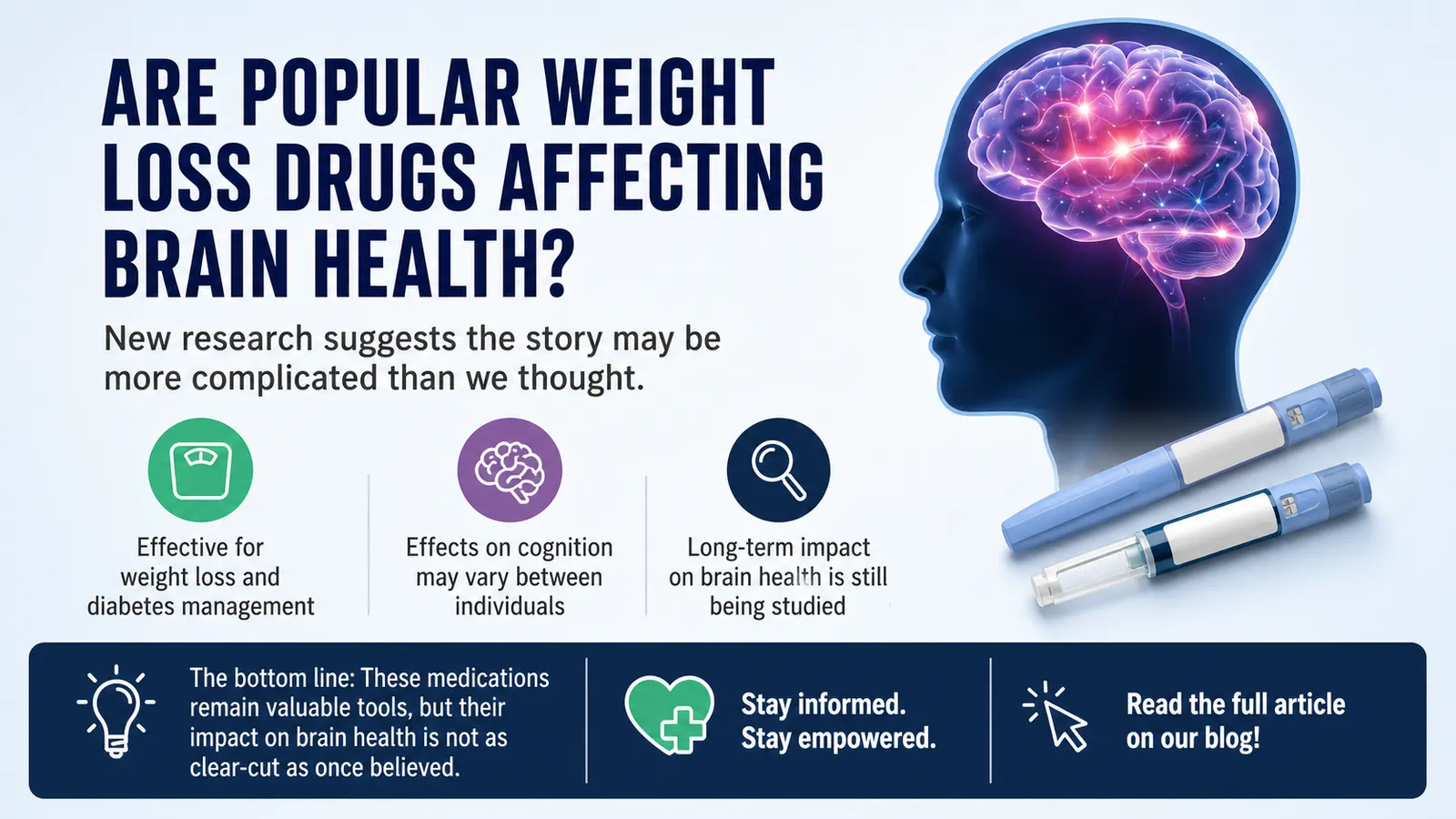
Are Popular Weight Loss Drugs Affecting Brain Health? What Medicare Beneficiaries Should Know
Medications like Ozempic and Wegovy have quickly become some of the most talked-about treatments in healthcare today. Originally designed for diabetes management, they are now widely used for weight loss—and many patients have heard that these drugs may even help protect the brain.
But as newer research emerges, the reality appears to be more nuanced—especially for those on Medicare who are thinking long-term about their health.
What We’ve Been Hearing
GLP-1 receptor agonists (the class of drugs that includes Ozempic and Wegovy) have been linked in some early studies to potential cognitive benefits. There has even been discussion around whether they could reduce the risk of dementia or slow cognitive decline.
For many, that’s an exciting idea—particularly for older adults who are understandably focused on preserving memory, independence, and quality of life.
What the Latest Research Is Showing
New findings presented at the American Academy of Neurology annual meeting suggest we should take a more balanced view.
Rather than confirming a clear brain-protective effect, researchers are seeing a more complex picture:
- Cognitive outcomes may vary from person to person
- The benefits are not consistent across all patient groups
- In some cases, the expected neurological advantages may be limited or unclear
In short, these medications are not a guaranteed “brain booster.”
Why This Matters for Medicare Beneficiaries
For those navigating Medicare, decisions about medications are rarely just about today—they’re about the long-term.
Here’s where this becomes especially important:
- Coverage varies: Many weight loss medications are not broadly covered under Medicare, which means patients may be paying significant out-of-pocket costs.
- Long-term expectations matter: If someone is taking a medication believing it will also protect their cognitive health, that assumption needs to be grounded in solid evidence.
- Healthcare planning is bigger than one medication: True long-term protection—financially and medically—comes from having the right overall strategy, not relying on a single solution.
The Bigger Picture: Smart Planning Over Assumptions
This is where having the right guidance really matters.
As an advisor, our role isn’t just to help you choose a plan—it’s to help you think through decisions like this with clarity:
- What is the medication actually proven to do?
- What are the realistic expectations?
- How does this fit into your broader healthcare and financial plan?
Because at the end of the day, healthcare isn’t an investment where you chase upside—it’s protection against risk.
The Bottom Line
GLP-1 medications remain highly effective for diabetes management and weight loss. That hasn’t changed.
But when it comes to brain health:
- The benefits are not yet clearly defined
- The science is still evolving
- And assumptions about cognitive protection should be made cautiously
Final Thoughts
In today’s environment, it’s easy to get caught up in headlines and promising new treatments. But the most important decisions—especially in Medicare—are the ones made with a long-term perspective.
That’s the value of having a knowledgeable advisor in your corner: helping you separate what’s proven from what’s still developing, and making sure your decisions today truly support your future.
References
- MedPage Today: medpagetoday.com/meetingcoverage/aan/120862
- Meta-analysis on cognitive outcomes: pubmed.ncbi.nlm.nih.gov/41524953
- Dementia risk analysis (JAMA Neurology): jamanetwork.com/journals/jamaneurology/fullarticle/2831975
- Liraglutide Alzheimer’s trial summary: biospace.com/drug-development/novos-older-glp-1-drug-slows-cognitive-decline-in-phase-iib-alzheimers-trial
- Nature review on neurological effects of GLP-1 drugs: nature.com/articles/s44220-025-00390-x
This article is intended for educational purposes only and should not be considered medical advice. Always consult your physician before starting, stopping, or changing any prescription medication.